Everyday English phrases from our video lessons
Natural phrases for everyday situations from our short videos — explained, with examples and an exercise with answers.
 Everyday phrases · Lesson 115“We had already left when the rain started”: how to use the Past PerfectTwo past actions, one of them earlier: why “We had already left when the rain started” uses the Past Perfect, and where “already” goes.Read
 Everyday phrases · Lesson 114Past Continuous with Past Simple: “She was cooking dinner when I came home”How to say “she was cooking dinner when I came home”: why one action takes Past Continuous and the other Past Simple, and when to use while instead of when.Read
 Everyday phrases · Lesson 113How to say “I bought this phone last month”: the past tense of “buy”“I bought this phone last month”: why it’s “bought” and not “buyed”, why there’s no “in” before “last month”, and the Present Perfect trap.Read
 Everyday phrases · Lesson 110Past Continuous: how to form it and when to use itWhen an action was in progress in the past, how a shorter event interrupts it, and how to build Past Continuous with was/were + -ing.Read
 Everyday phrases · Lesson 109I was in a park: was and were in the pastI was or I were? How to use was and were in the past, make negatives and questions with to be, and avoid the most common mistakes.Read
 Everyday phrases · Lesson 108Past Simple: negatives and questions with “did”Negatives and questions in Past Simple: why the verb goes back to its base form after did or didn’t, and the mistakes learners make most.Read
 Everyday phrases · Lesson 107Past tenses in English: four forms and when to use eachPast Simple, Past Continuous, Past Perfect and Past Perfect Continuous: what each one means, how it is formed and how to pick the right one in a story.Read
 Everyday phrases · Lesson 104How to say “The line is too long, let’s come back later”How to say “the line is too long, let’s come back later”: why “too” changes the meaning, and how to suggest coming back.Read
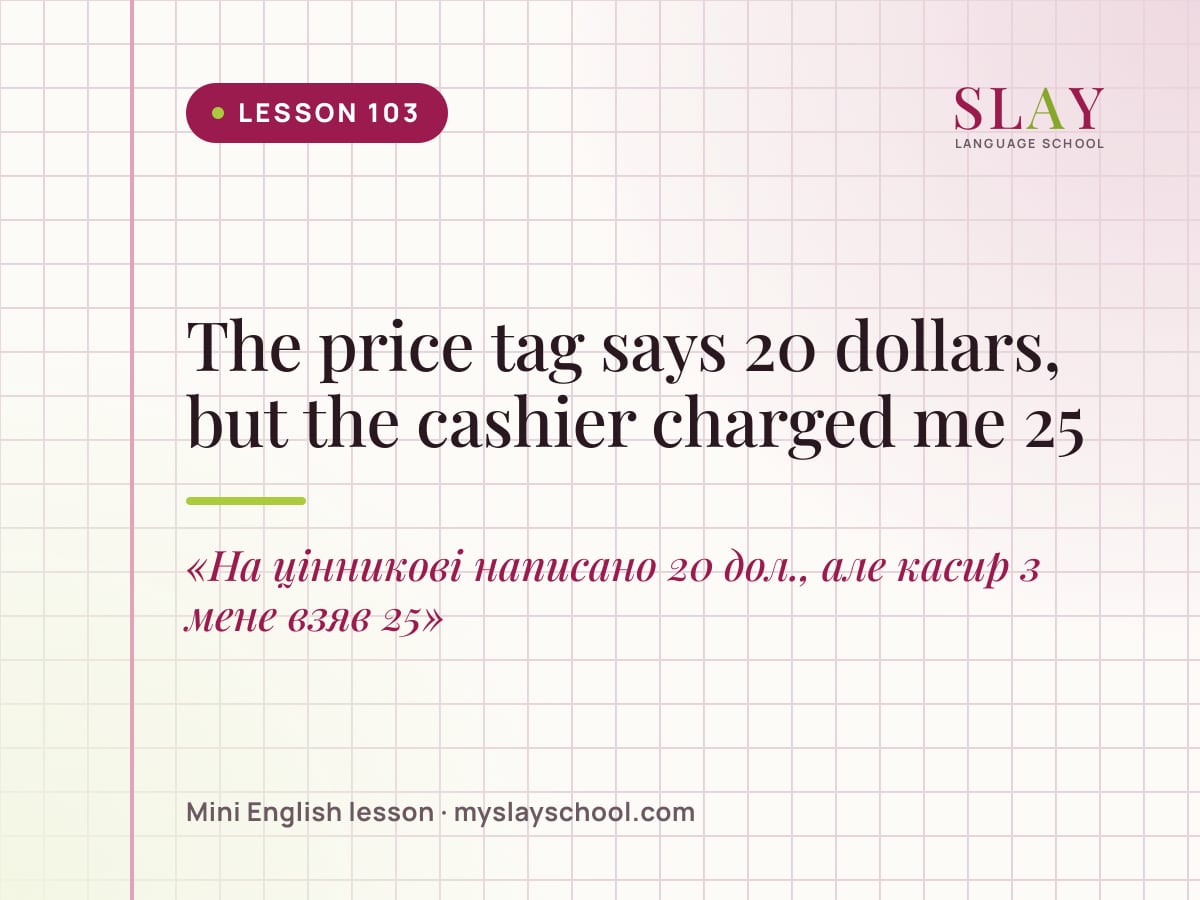 Everyday phrases · Lesson 103“The price tag says 20 dollars”: how to say it and when to complainHow to say that the price tag shows one amount and the cashier charged another: says vs is written, charged me, and the common mistakes.Read
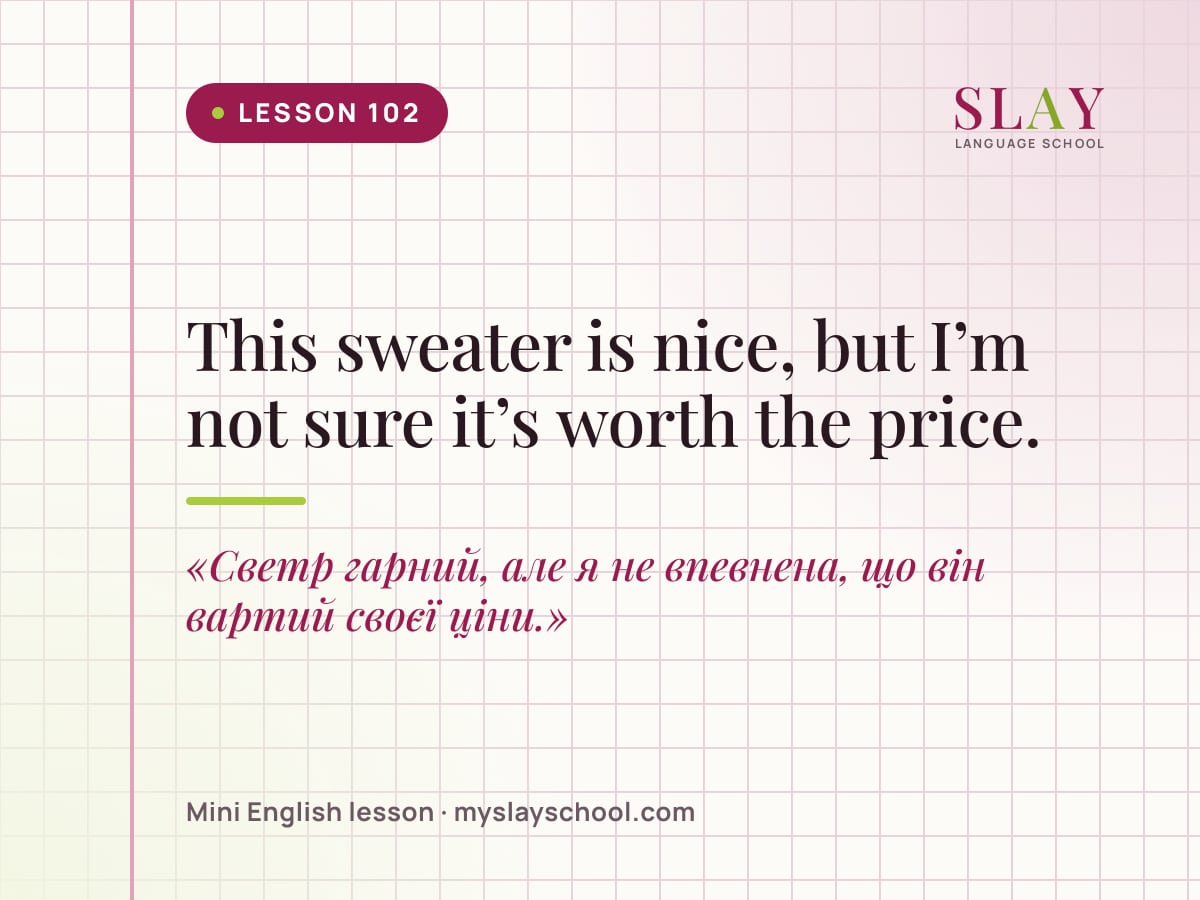 Everyday phrases · Lesson 102“Worth the price”: how to use worth in EnglishIs it worth the money? How “worth” works in English, the phrases you need when shopping, and the mistake almost everyone makes: worth to instead of worth + -ing.Read
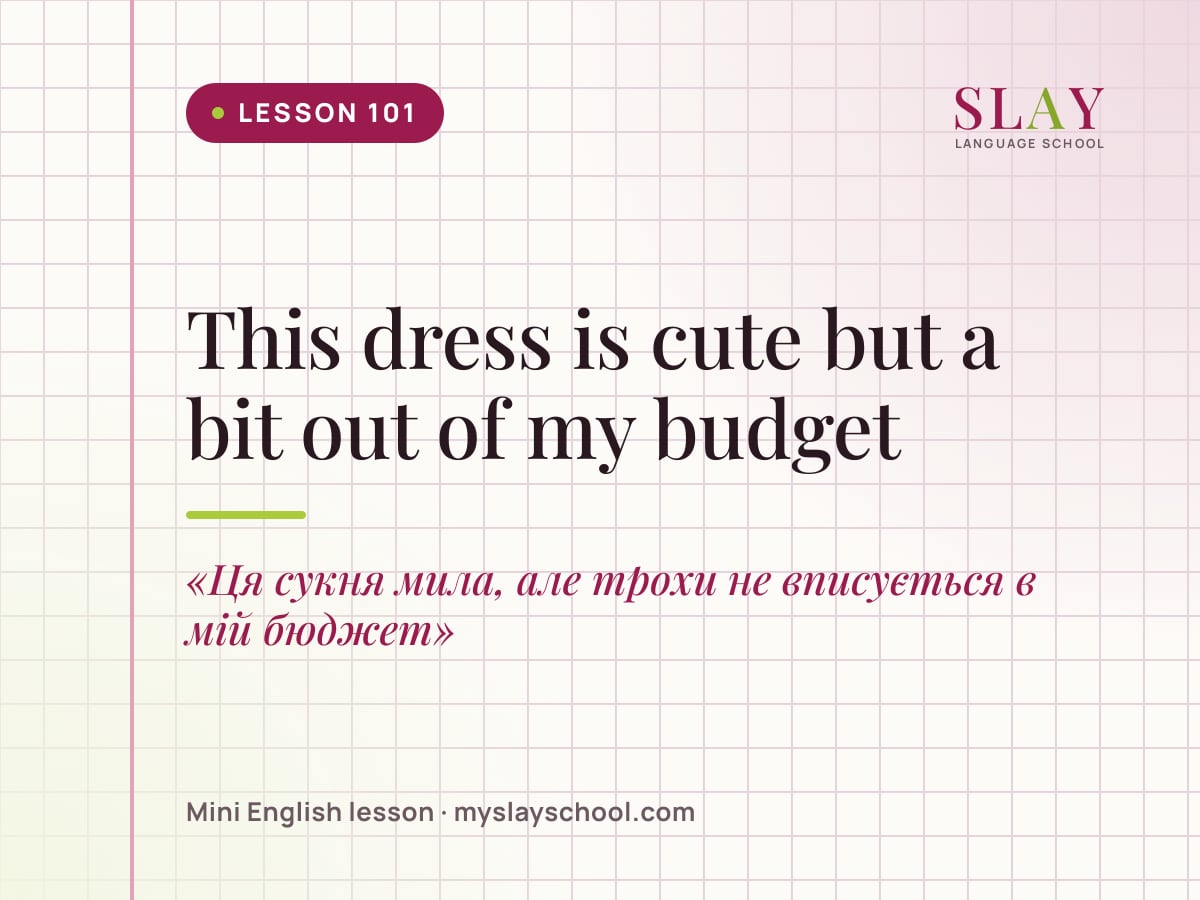 Everyday phrases · Lesson 101“This dress is cute but a bit out of my budget”: how to say itHow to say a dress is nice but too expensive: “out of my budget”, “fits my budget”, “over budget” and the mistakes to avoid.Read
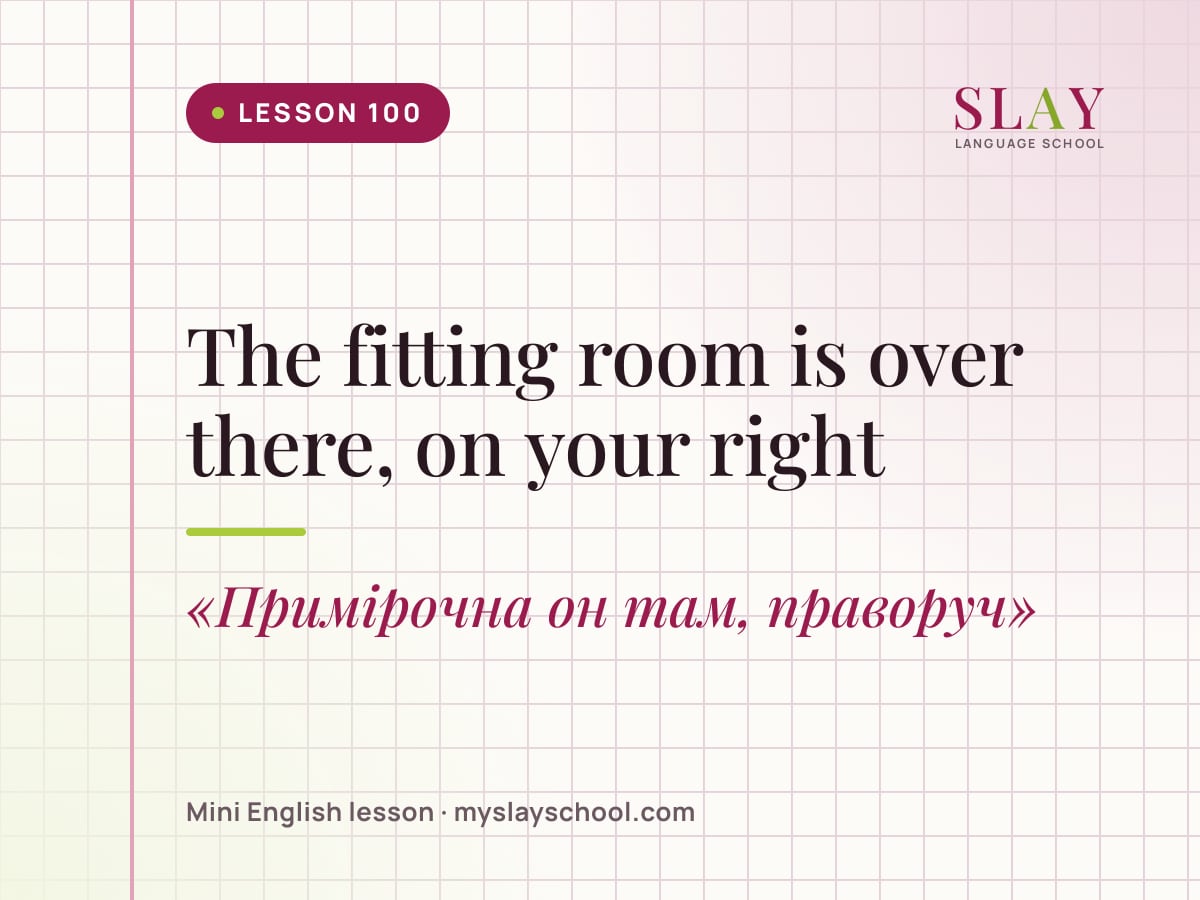 Everyday phrases · Lesson 100Giving directions in a shop: “The fitting room is over there, on your right”How to give directions in a shop in English: “over there” vs “over here”, “on your right” vs “on the right”, and the mistakes to avoid.Read
Book your free trial lesson
Fill in a short form — we’ll get in touch and find a time that suits you.
- First lesson is free
- English, French or German
- Online or in Odesa
Prefer to message us? We’re on Instagram Direct:
Message us on Instagram(opens in a new tab)
Thank you! We’ve got your request
We’ll get in touch shortly to arrange your free trial lesson.
In the meantime, check us out on social media: