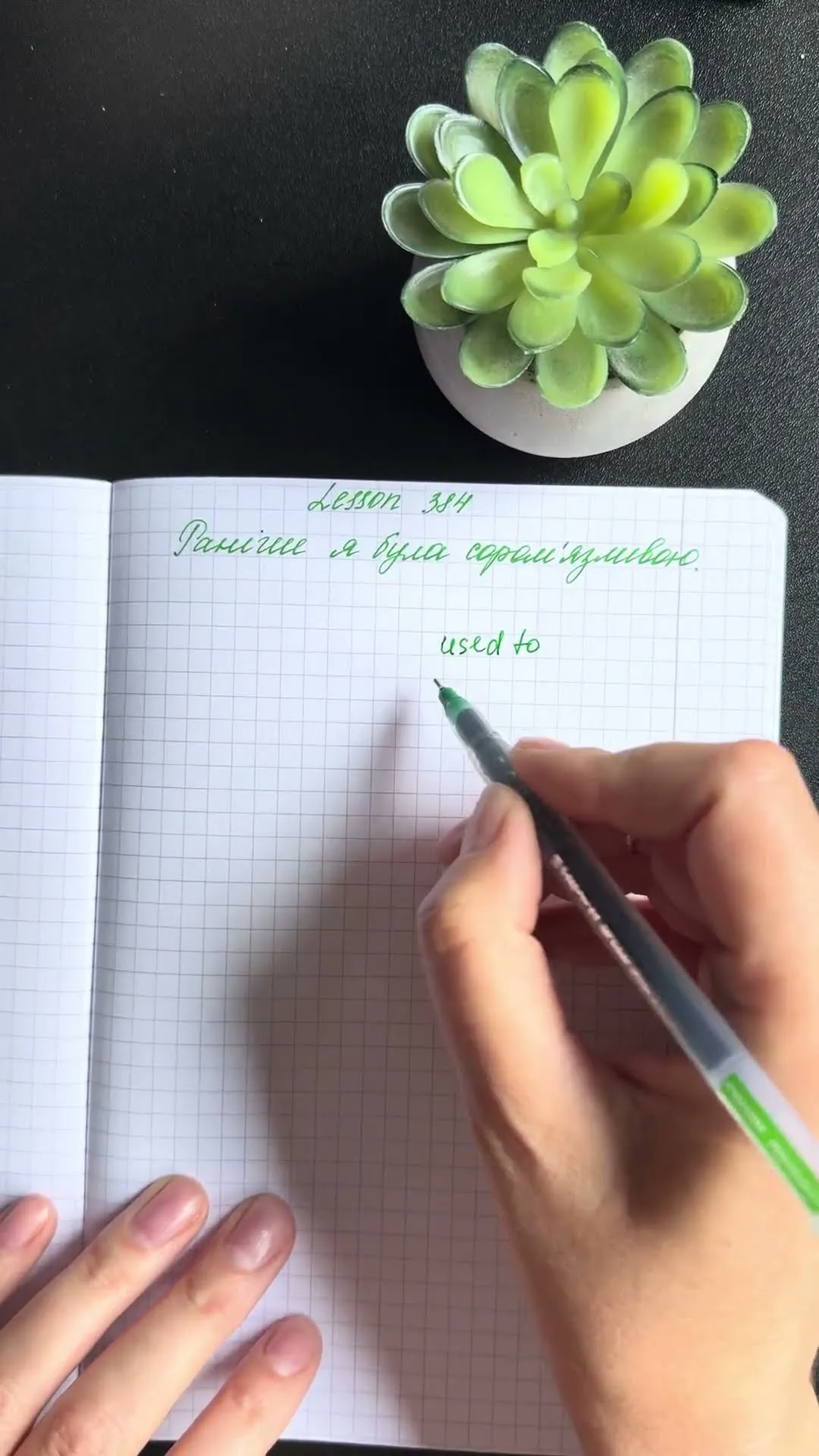
In this short video lesson, the Ukrainian sentence «Раніше я ненавиділа англійську» (“I used to hate English”) appears in the notebook with the familiar hint: used to. Watch the video, then read on for feelings that change, negatives and questions.
The phrase: I used to hate English
Used to describes not only habits but also states and feelings that were true in the past and aren’t now: love, hate, like, have, live, believe.
- I used to hate English.Not any more!
- I used to love cartoons.A feeling from the past.
- He used to have long hair.A past state.
You can’t replace used to with would here: I would hate English means something else entirely — “I’d hate English (if…)”.
Negatives and questions
- Negative: didn’t use to — no d, because did already shows the past: I didn’t use to like vegetables.
- Question: Did you use to…? — Did you use to play sports?
- In conversation, people often say I never used to like vegetables.
Talking about a change
The most natural way is to add but now: I used to hate English, but now I love it.
Check yourself
Say it in English, then reveal the answer:
1.Reading wasn’t something you liked in the past.
Answer
I didn’t use to like reading.
2.Ask a friend whether they did sports in the past.
Answer
Did you use to do sports?
3.You hated mornings before, but you love them now.
Answer
I used to hate mornings, but now I love them.
New mini-lessons come out on our YouTube channel. And if you don’t love English yet, come to a free trial lesson — you might end up saying but now I love it too.