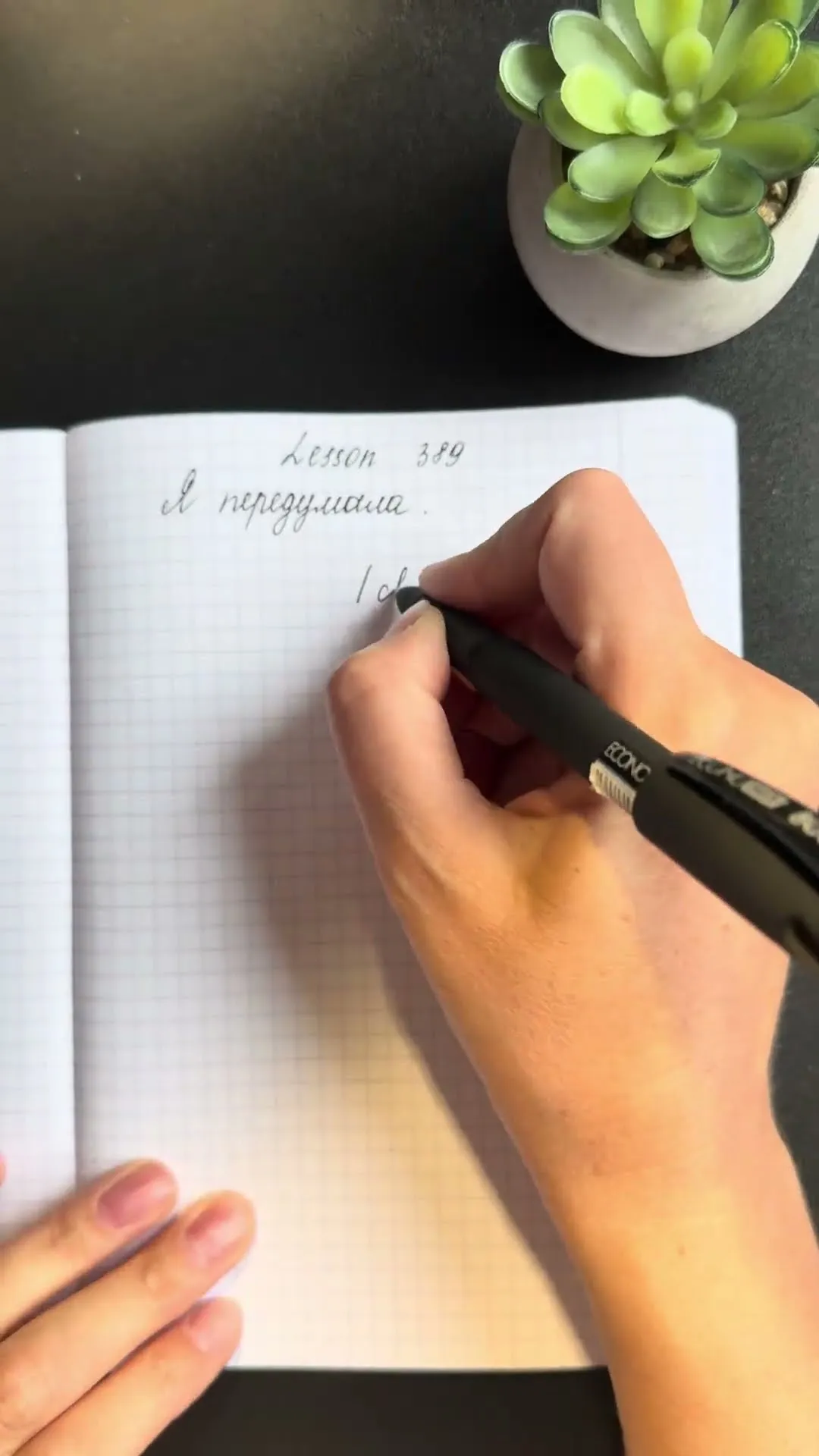
In this short video lesson, the Ukrainian sentence «Якби ж у мене було більше часу» (“If only I had more time”) appears in the notebook with a hint: wish + Past Simple. Watch the video, then read on for how this structure works.
The phrase: I wish I had more time
Notice the verb is in the past tense — had — even though we’re talking about the present. The past tense signals that the wish doesn’t match reality: right now, there isn’t enough time.
- I wish I had more time.But I don’t have enough time now.
- I wish I knew the answer.But I don’t know it.
- I wish I lived by the sea.But I live somewhere else.
A wish about the present is often the opposite of the facts: “I don’t know” becomes the positive I wish I knew.
I wish I was or I wish I were?
Both are correct. I wish I were taller is more traditional and a little more formal; I wish I was taller is common in conversation. In exams like IELTS, were is the safer choice.
Wish vs hope
- I hope — for things that may well happen: I hope I’ll have more time next week.
- I wish — for things that aren’t true now: I wish I had more time (but I don’t).
Two more forms with wish
- I wish I had studied harder.wish + Past Perfect — regret about the past.
- I wish you would call me more often.wish + would — wanting someone to change what they do.
Check yourself
Say it in English, then reveal the answer:
1.You don’t speak French, and you’re sorry about it.
Answer
I wish I spoke French.
2.It’s Monday, but you’d love it to be Saturday.
Answer
I wish it were (was) Saturday today!
3.Tomorrow might be sunny — you’d like that.
Answer
I hope it will be sunny tomorrow.
New mini-lessons come out on our YouTube channel. And if you want grammar to come naturally when you speak, come to a free trial lesson.